Compare renting locally with flying to Mount Elbrus with your own boots, crampons, clothing, backpack and technical equipment.
 Rock’N’RentLocal equipment notes from Terskol
There is no universal “bring everything” or “rent everything” answer for Mount Elbrus. A sensible packing plan is usually mixed: personal items and equipment you already know come from home, while bulky, expensive or rarely used items can be rented in Terskol. The decision is not only about price. Fit, experience, airline rules, route, season and the time available for fitting all matter.
First obtain the final equipment list for your program. Mark every line as bringing, renting, organizer-provided or unresolved. Only then compare baggage costs with rental costs. This order prevents two common mistakes: buying things the program does not require and discovering a missing item just before departure.
What is usually best brought from home
Base layers, socks, underwear, a hat, personal first-aid supplies, regularly used medication, prescription glasses and familiar contact lenses are personal items. There is little to gain by renting them, and their fit, condition and immediate availability matter.
Tested gloves, sunglasses and base layers are also often worth bringing. The word “tested” matters more than “mine”: an old jacket with a worn membrane, a badly scratched lens or insulation that has lost its loft is not a good choice simply because you own it.
What often makes sense to rent in Terskol
Double mountaineering boots, crampons, an ice axe, a helmet, harness, high-altitude down jacket, large backpack, sleeping bag, tent and some technical equipment are common rental candidates. They take up considerable space, are expensive to buy and may be needed only once.
Winter equipment follows the same logic. Flying with skis, a snowboard and boots can cost more and require separate packaging, while a complete set can be selected locally. The shop still needs to confirm the right size and category in advance. The calculator shows an estimate; it does not reserve stock by itself.
Boots deserve their own decision
If you already have suitable boots with a proven fit for the route, bringing them is often sensible. A new pair bought immediately before the trip does not offer the same advantage. If you do not own appropriate high-altitude boots, rental lets you compare available models without buying an expensive pair for one climb.
For the preliminary selection, send the length of both feet in millimeters, your usual size, and any relevant information about width or instep. Try both boots in the socks you will use and leave time to change model. The full process is covered in our Mount Elbrus boot-fitting guide.
Boots and crampons form one system
Crampons cannot be selected by shoe size alone. Binding type, frame length and toe-bail shape must match the specific boot. If you bring your own boots, bring them into the shop. If you rent both items, have the crampons adjusted to the exact pair being issued and check retention again before departure.
Our crampon and boot compatibility guide explains the main binding systems and checks. Fitting at the counter is not instruction in mountain use; the guide or instructor remains responsible for confirming the required skills.
Clothing must work as a system
A down jacket, shell and insulating layers have to work together. If you rent outerwear, bring the base and mid layers you will wear underneath. A high-altitude down jacket should fit over the working system without compressing its insulation or interfering with the harness.
Review the full Mount Elbrus layering system before deciding what to rent. It usually makes clear which garment you actually need and where you already have a functional equivalent in your luggage.
Rent technical equipment only for a defined task
A helmet, harness, carabiners, ice axe, ice screws and rope are not a souvenir “climbing set.” Every item needs a defined purpose, a place in the wider system and a person who knows how to use it. Equipment appropriate for one route is not automatically appropriate for another.
Personal technical equipment with an unknown history, visible damage or a long-overdue inspection is not better simply because you own it. At pickup, check markings, condition and completeness with the rental team, and confirm the final technical specification with your group leader.
Count group and camping equipment separately
Tents, ropes, stoves, fuel, the group first-aid kit, repair equipment and some navigation or communication devices may be shared. Do not rent one of each for every participant, and do not assume the organizer supplies them automatically. Use a table that records quantity, specification, provider, responsible person and carrying stage.
Our shared-equipment guide explains the method. A personal avalanche transceiver, probe and shovel are per-person items, not a shared group set. Any other arrangement is a decision for the group leader, not a rental recommendation.
Gas and fuel are not ordinary baggage
Gas canisters, gasoline and other fuels are subject to aviation restrictions. A stove and even an empty fuel bottle may require separate approval. Check the current rules of every operating carrier, and plan to obtain gas or fuel locally through the organizer or a suitable shop.
Crampons, ice axes, batteries and other sports equipment also need to be checked against each carrier’s current baggage rules. See our step-by-step guide to flying with Mount Elbrus equipment.
Ask four questions about every item
- Is it actually required? Check the route, season and the guide’s current list.
- Is familiar fit critical? If so, bring a proven item or allow time for a proper fitting.
- Can you use it? Renting equipment does not replace instruction and practice.
- Which option costs less across the whole trip? Include baggage, packaging, transfers, rental period and the likelihood of using a purchase again.
A practical mixed example
Bring: base layers, socks, personal medication and first aid, glasses, tested gloves, documents and electronics. Consider renting: double boots, crampons, an ice axe, helmet, harness, high-altitude down jacket and large backpack if the program requires them and you do not own suitable equipment. Confirm separately: ropes, tents, stoves, fuel, the group first-aid kit, communications and route-specific technical equipment.
This is an example of how to divide a list, not a universal Mount Elbrus packing list. The classic south route, north side, traverses, west and east approaches, winter routes and ski tours require different decisions.
When to send the rental request
Use the Mount Elbrus rental reservation guide to plan timing, and send dates, measurements and the list early—especially for several sets, an uncommon size or a departure on the north, west or east side. Allow time in Terskol for fitting, joint inspection and possible substitution. Do not plan to collect critical equipment a few minutes before the group leaves.
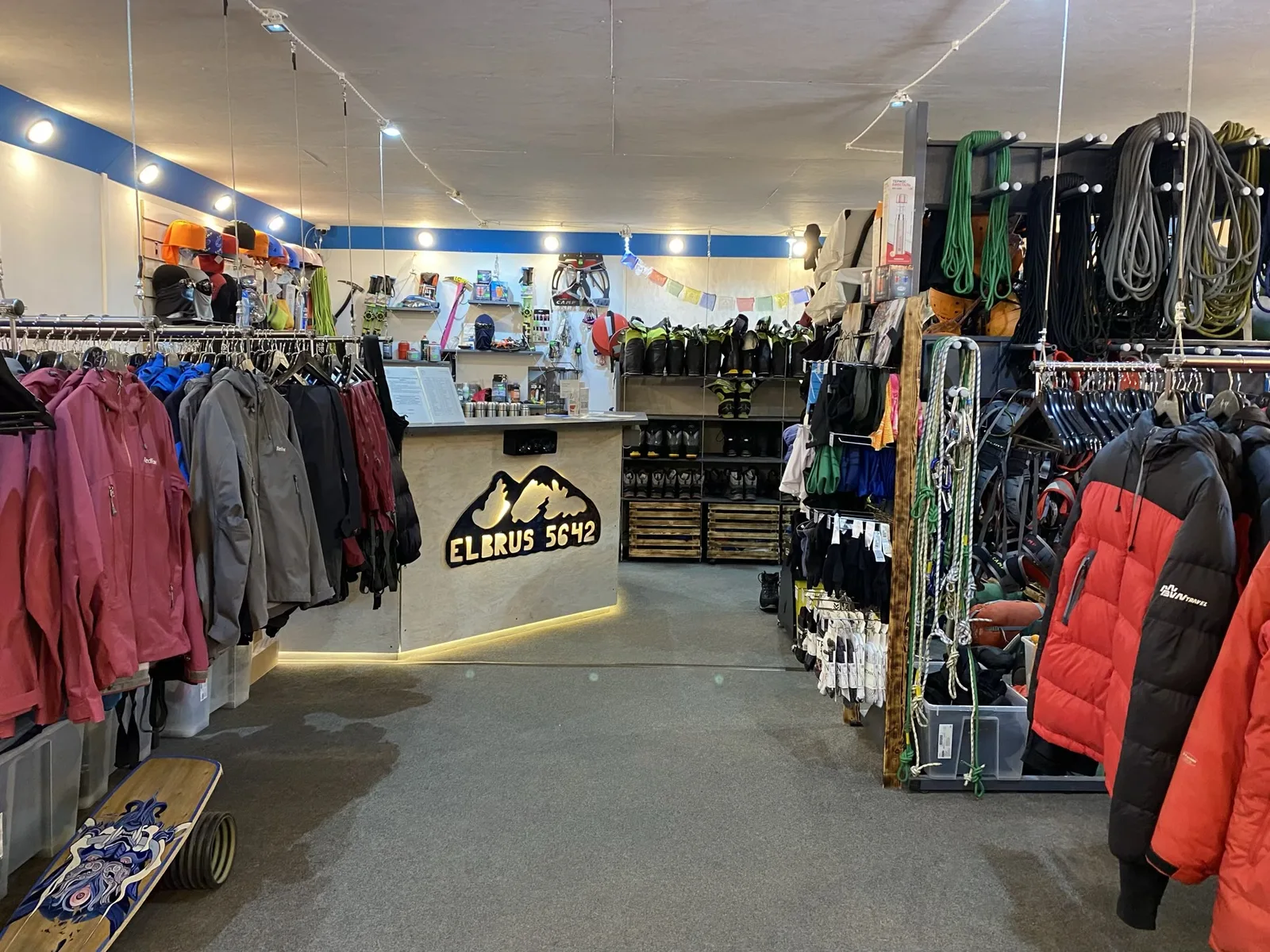
Build a preliminary list in the Rock’N’Rent calculator, compare the current rates on the price page, and wait for confirmation of stock. Pickup and return take place at Rock’N’Rent at Alamat Hotel in Terskol, on the lower level; the address and current opening hours are on the contact page.