Build a Mount Elbrus south-route gear list: boots and crampons, clothing layers, technical equipment, rental days and final fitting in Terskol.
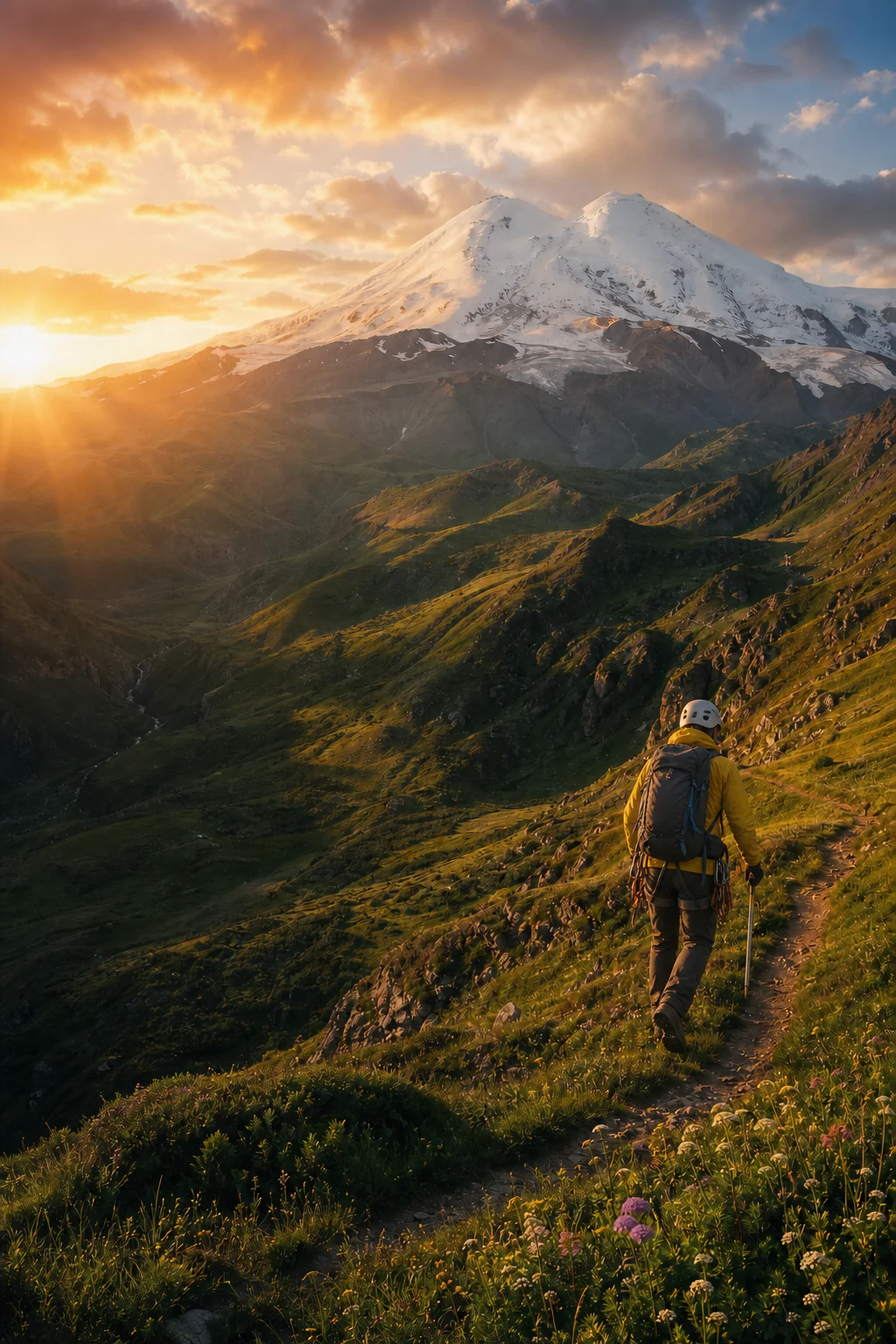
 Rock’N’RentMount Elbrus climbing equipment notes
The best Mount Elbrus south-route gear list is not the longest list. It is the list that matches your exact program, separates personal equipment from group equipment, and has been checked as a complete system before you leave Terskol. The south side has cable-car access, staffed refuges and optional mechanical assistance on some programs, but none of that makes cold, wind, poor visibility or incompatible equipment less serious.
This guide is for a conventional summer mountaineering program on the south side. A winter ascent, an oxygen-assisted itinerary, a traverse or an independent climb requires a different calculation. Start with your organizer’s current written list, use the Mount Elbrus rental calculator to identify what you need locally, and let the responsible guide make the final route and equipment decisions.
The short answer: what usually matters most
For most south-route climbers, the critical decisions are not whether to pack one more T-shirt. They are whether the high-altitude boots fit, whether the crampons match those exact boots, whether the clothing system still allows movement when every layer is worn together, and whether hands, face and eyes remain protected when the weather deteriorates.
- Use two footwear systems when the itinerary calls for them: trekking footwear for lower acclimatization days and properly fitted double or triple mountaineering boots for the higher mountain.
- Treat boots and crampons as one unit: compatibility must be checked on the actual pair issued to you, not inferred from a model name.
- Build clothing as a system: base layer, fleece, weatherproof shell and substantial insulation must fit and work together.
- Prepare separate eye and hand options: sunglasses do not replace goggles, and thin gloves do not replace insulated mittens.
- Clarify ownership: know what you bring, what you rent, what the organizer supplies and what remains unresolved.
Start with the exact south-route program
“Elbrus from the south” describes a side of the mountain, not one universal itinerary. Programs differ in length, acclimatization schedule, accommodation, transport, use of a snowcat, number of nights on the mountain and whether the climb continues across the summit to another side. These differences change the pack, the rental period and sometimes the equipment itself.
Do not copy a list from someone else’s trip without checking it. Group ropes, ice screws, radios, navigation equipment and a first-aid kit may be supplied by the organizer, or responsibility may be divided differently. Rock’N’Rent confirms availability, sizes, price and deposit; it does not determine the route or the group’s equipment. Tour questions must go to the tour operator, not the rental desk.
Organize equipment by the stage when it is used
A flat packing list hides the most important question: which items must work together on the coldest and longest day? Divide the program into functional stages before deciding what to bring or rent.
Arrival, valley and lower acclimatization
Comfortable clothing and trekking footwear matter here because repeatedly wearing rigid high-altitude boots on lower trails is neither necessary nor useful. This is also when you discover whether your daypack carries water, a shell and an insulation layer without obstructing movement.
Snow training and higher acclimatization
This is where the higher-mountain system should be tested: mountaineering boots, crampons, gaiters, helmet, harness and the layers intended for snow and wind. Training is not the moment to use an unfamiliar fastening system for the first time, but it is the right time to identify pressure points, loose straps and inaccessible zippers before summit day.
Summit attempt
The summit system must be complete before departure: warm boots, compatible crampons, windproof outer layers, down insulation, hand protection, face protection, goggles, headlamp and technical equipment specified by the guide. Anything that “should fit” is still unresolved until you have tried it with the rest of the system.
Return and equipment handover
Keep track of removable parts, straps and storage bags during the descent. Return the rental set complete, reasonably clean and dry, within the agreed period. If you need more days, contact the shop before the original deadline; an extension applies only after written confirmation.
Footwear: use the right boot for the right part of the climb
Many south-route programs involve two very different jobs. Lower walks benefit from flexible trekking boots. Snow, prolonged cold and the summit attempt require mountaineering footwear selected for the conditions and the guide’s requirements. One pair should not be forced into both roles simply to reduce luggage.
For the higher mountain, fit matters more than the nominal EU size. Try both boots with the socks you plan to use. Stand, walk, flex the boot and simulate a downhill stance. Your toes should not strike the front, your heel should not lift excessively and the fastening system should not create a concentrated pressure point. Feet can swell during a long day, while overtightening can reduce circulation. Read the full Mount Elbrus boot-fitting guide before choosing between available models.
Do not reserve a high-altitude boot only by its temperature reputation or by choosing the most expensive option. The correct model is the warmest appropriate boot that fits your foot, works with the required crampon and allows the movement expected on the route. The final model must be confirmed during fitting.
Crampons: compatibility is checked on the actual boots
Mountaineering crampons are not a generic accessory that can be collected separately and assumed to fit later. The binding type, frame length, toe shape, heel geometry and adjustment range must suit the actual boots. The rental team should mount both crampons, check the adjustment and confirm that the fastening remains secure.
The complete check includes more than attaching one crampon while standing in the shop. Verify left and right orientation, strap routing, adjustment security and whether loose strap ends can be managed with gloves. If you bring your own boots, bring them to the fitting. If you rent boots, choose the boots first and the crampons second. The detailed boot and crampon compatibility guide explains the sequence.
Technical equipment: know what is personal and what is shared
A typical personal list may include a mountaineering ice axe, harness, helmet, carabiners and safety attachments. A program may separately provide ropes, ice screws, radios, navigation devices or other group equipment. Do not rent every technical object you see in a catalog. Confirm the configuration and the person responsible for each item.
The ice axe must be the type and length required by the guide. The harness must fit over the clothing you will actually wear. The helmet must remain stable with a warm hat or balaclava. Carabiners and lanyards must match the guide’s intended system. Practice does not come with rental: if you cannot confidently use a required item, that is a training and supervision issue, not a shopping issue. See the ice axe, harness and helmet guide for the fitting checks to complete in Terskol.
Clothing: build one system that still works when fully layered
Mount Elbrus clothing should manage exertion during acclimatization and protect against wind and cold during slower periods. The answer is not one “summit jacket.” It is a sequence of layers that can be adjusted without exposing the body unnecessarily.
- Base layer: moves moisture away from the skin and should cover the upper and lower body where required.
- Fleece or active insulation: provides adjustable warmth during movement.
- Windproof and waterproof shell: protects the system from wind and precipitation without becoming too tight over insulation.
- High-loft insulation: a substantial expedition down jacket and, when specified, 3/4 down shorts add warmth during cold, slow or stationary periods.
Try the complete combination. Raise your arms, bend, fasten the harness, close the shell and operate every zipper. Check that the hood works with headwear and a helmet, cuffs fit over or under gloves as intended, and shell pants do not restrict steps. The Mount Elbrus layering guide goes deeper into how the pieces interact.
Hands, face and eyes need more than one line on a checklist
A practical hand system normally separates dexterity from maximum warmth. Thin gloves help with adjustments; warmer gloves provide intermediate protection; insulated high-altitude mittens protect during colder or slower periods. Each layer must fit without compressing the fingers or restricting circulation. Practice handling buckles, poles, zippers and carabiners while wearing the intended gloves.
Eye protection also has two jobs. Mountain sunglasses provide secure high-coverage protection in clear conditions. Ski goggles protect vision in wind, blowing snow and poor visibility. Test both with your helmet, hat, balaclava and face covering. Check for gaps, pressure points and fogging before the climb. A spare solution for prescription lenses must be planned rather than improvised.
Backpack, duffel and sleeping equipment depend on logistics
South-side infrastructure usually reduces the need to carry a full expedition load, but backpack size still depends on the actual itinerary. Choose the pack only after listing what must be carried personally on acclimatization days and the summit attempt. Water, shell, insulation, goggles, spare gloves, food and personal essentials must remain accessible instead of being packed at the bottom of the bag.
Fit the pack with representative weight. The hip belt should transfer load without interfering with a harness, shoulder straps should sit correctly and nothing should press against the back. Use the Mount Elbrus backpack-size guide instead of treating one capacity as universal.
A separate duffel is a transport and storage tool, not automatically a summit pack. Confirm whether the program includes one, where it will be stored and how it moves between the valley and refuge. Sleeping-bag requirements also vary with accommodation. Ask for the required temperature rating and whether bedding is provided before selecting a rental bag.
Small items that cause big problems when missing
The least expensive items are often the easiest to overlook because they appear ordinary. Check them deliberately:
- a tested headlamp with the backup power arrangement specified by the guide;
- a secure one-liter thermos, or another capacity specified by the program;
- gaiters if required for the selected boot and conditions;
- sun protection for skin and lips;
- warm socks that fit inside the chosen boots without crowding the foot;
- personal medication, prescription eyewear backup and any individual medical items discussed with the organizer;
- a warm hat, balaclava and windproof face protection that work with goggles and helmet.
Do not interpret the presence of an item in the rental catalog as proof that it is required, available for your dates or suitable for you. Conversely, an item absent from the rental catalog may still be mandatory and must be brought or purchased.
How many rental days should you enter?
Rental is calculated by calendar day, not by rolling 24-hour periods. The calculator uses four days as a practical starting point for a standard south-side preset, but it is not a rule for every itinerary. Items used on lower acclimatization walks may be needed earlier than summit equipment. Trekking poles, for example, can be useful before the high-altitude rental set is collected and may need a longer rental period.
Set the main duration, then adjust individual rows. Do not pay for unnecessary days simply because every field began with the same number, and do not shorten a period if the item is required earlier in the program. Send the final collection and return dates with the request so the shop can confirm availability and the actual amount.
Use four columns before making a reservation
Create a working list with four statuses:
- Bring: equipment you own, trust and have already tested together.
- Rent: items you want fitted or collected in Terskol.
- Supplied: group or program equipment explicitly confirmed in writing by the organizer.
- Unresolved: anything whose model, quantity, responsibility or rental period is still unclear.
The job is not finished while the fourth column contains anything. Resolve it with the organizer or rental team before arrival. “Probably supplied” and “probably available” are not useful statuses.
Final fitting and collection checklist in Terskol
Allow enough time for fitting. Do not schedule collection immediately before departure for the mountain. At Rock’N’Rent at Alamat Hotel in Terskol, check the issued equipment as a system:
- try both high-altitude boots with the intended socks;
- fit both crampons to those exact boots;
- wear the harness over the layers used on the higher mountain;
- adjust helmet, headwear, goggles and face protection together;
- put on the full insulation and shell combination and move in it;
- operate zippers, buckles, poles and carabiners with gloves;
- switch on the headlamp and check all removable parts;
- compare every issued item with the agreement and collection record.
The calculator is a planning tool, not an automatic reservation or a safety guarantee. Rock’N’Rent confirms sizes, stock, dates, deposit and final price before collection. The route, season, forecast, current program and responsible guide determine the final equipment list.